
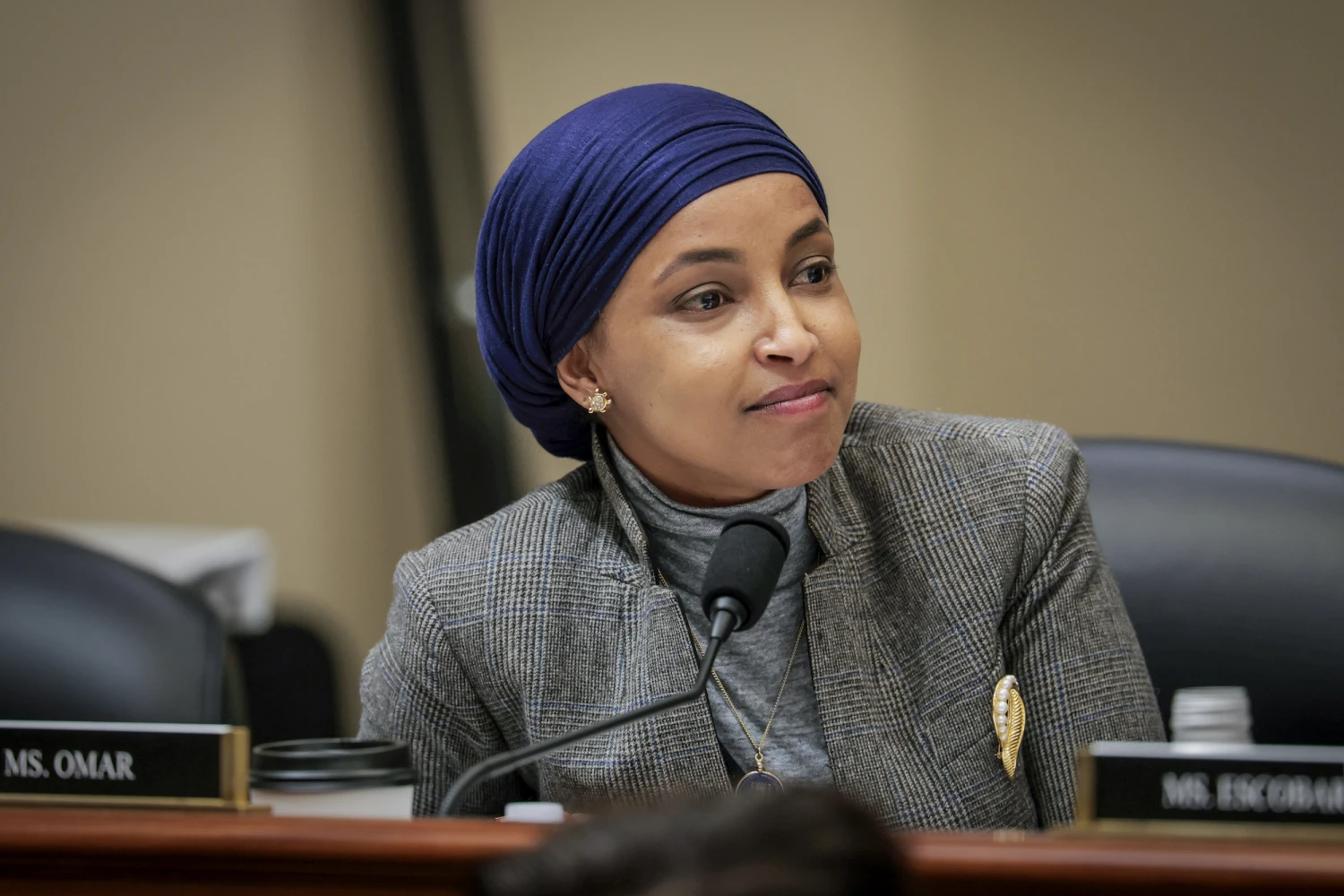
Ilhan Omar is an American politician who represents Minnesota’s 5th Congressional District in the United States House of Representatives. Born in Somalia, she arrived in the United States as a refugee and eventually became one of the most recognizable progressive voices in American politics. Her political career has focused on immigration, economic inequality, healthcare, education, workers’ rights and foreign policy.
Before entering Congress in January 2019, Omar served in the Minnesota House of Representatives. Her election to Congress marked a historic milestone for Somali-American and Muslim-American representation in national government.
Omar’s political career has attracted both strong support and significant criticism. Supporters see her as an advocate for marginalized communities and progressive reform, while critics have challenged her political positions, public statements and handling of controversies.
In October 2026, a federal investigation brought renewed attention to Omar after agents searched her Washington, D.C., residence under a judicially authorized warrant. The investigation’s full scope has not been publicly established, and Omar has denied wrongdoing. The search itself does not establish criminal guilt.
Ilhan Omar Quick Facts
| Fact | Details |
|---|---|
| Full name | Ilhan Abdullahi Omar |
| Date of birth | October 4, 1982 |
| Place of birth | Mogadishu, Somalia |
| Nationality | American |
| Political party | Democratic Party |
| Occupation | Politician and former policy adviser |
| High school | Edison High School, Minneapolis |
| University | North Dakota State University |
| State legislative service | Minnesota House of Representatives, 2017–2019 |
| Congressional service | Since January 2019 |
| Congressional district | Minnesota’s 5th District |
| Children | Three |
| Known for | Progressive politics and historic representation |
For additional biographical information, visit the U.S. House of Representatives Historical Directory and the official congressional profile.
Table of Contents
- Early Life and Childhood in Somalia
- Refugee Journey and Immigration to America
- Education and Early Career
- Parents, Family and Personal Life
- How Ilhan Omar Entered Politics
- Minnesota House of Representatives
- Election to Congress and Historic Achievement
- Political Views and Policy Priorities
- Controversies and Public Scrutiny
- Net Worth, Income and Financial Disclosures
- Influence and Political Legacy
- Frequently Asked Questions
Early Life and Childhood in Somalia
Ilhan Omar was born in Mogadishu, Somalia, on October 4, 1982. Her childhood began in a country that would experience profound political upheaval and a humanitarian crisis. Somalia’s central government collapsed in 1991, and the ensuing conflict contributed to widespread displacement, insecurity and disruption to everyday life.
Omar was eight years old when she and members of her family fled the conflict. The experience of leaving her home country during childhood later became an important part of her public biography and helped shape her interest in immigration, refugee protection and the treatment of displaced people.
Her early experiences were very different from those of many American politicians. Rather than growing up entirely in one country, Omar experienced displacement before eventually establishing a life in the United States. Her subsequent education and involvement in community affairs helped her build a path into public service.
Omar’s personal story is frequently discussed in the context of immigration, but her political career also reflects years of education, community work and participation in local government.
The official biography published by Omar’s congressional office describes her family’s flight from Somalia and eventual move to Minneapolis.
Refugee Journey and Immigration to America
After leaving Somalia, Omar and her family spent approximately four years in a refugee camp in Kenya. The family eventually resettled in the United States during the 1990s, beginning a new chapter in a country with a different language, culture and political system.
In 1997, Omar moved with her family to Minneapolis, Minnesota. The city would become central to her education, community involvement and political development. Minneapolis and the surrounding Twin Cities region have long been home to a significant Somali-American community, including refugees and immigrants who established new lives in Minnesota.
Adapting to life in a new country gave Omar direct experience of the challenges that many immigrant families face. These can include adjusting to unfamiliar institutions, finding educational opportunities and navigating public services. Her later advocacy for refugees and immigrant communities has often drawn attention to these experiences.
Omar became a naturalized American citizen in 2000, according to published biographical accounts. Her journey from Somalia to Minnesota became a defining part of her public story and a milestone in her path toward elected office.
Her experience as a refugee is an important part of her biography, but it should be understood alongside her education, professional work and involvement in local politics.
Education and Early Career
Omar attended Edison High School in Minneapolis and graduated in 2001. She later attended North Dakota State University in Fargo, North Dakota, where she earned a bachelor’s degree in 2011.
Her education helped prepare her for work in policy, community engagement and public service. Before seeking elected office, she gained experience working with residents and institutions in the Minneapolis area.
According to her official congressional biography, Omar worked as a community educator at the University of Minnesota. She also served as a policy fellow at the Humphrey School of Public Affairs and as a senior policy aide for the Minneapolis City Council.
These positions exposed her to local policy debates and the practical responsibilities of government. They also provided experience in community outreach, policy analysis and the process of responding to residents’ concerns.
Her career before elected office was an important foundation for her later campaigns. She developed connections within the community and gained an understanding of how government decisions affect residents in their daily lives.
The U.S. House Historical Directory provides further details about her education and public-service background.
Parents, Family and Personal Life
Omar’s family history is closely connected to her childhood in Somalia, her family’s refugee experience and their eventual settlement in Minnesota. Her father, Nur Omar Mohamed, has been mentioned in public accounts of her early life and migration to the United States.
Omar is a mother of three children. Although her work as a member of Congress places her in the public eye, not every aspect of her children’s lives is public information. Responsible biographical reporting should respect their privacy and avoid repeating unsupported personal claims.
Omar married political consultant Tim Mynett in 2020. Mynett’s professional work has included political consulting, and business arrangements connected to the political world have attracted public scrutiny. Coverage of such matters should distinguish documented financial and campaign records from allegations or political criticism.
Omar’s previous relationships have also been discussed in news reports. Her marital history has become a recurring subject of political controversy, including allegations about a former marriage. Omar has denied the claim that she married her brother. The allegation should not be presented as an established fact without reliable evidence and an authoritative finding.
Because personal relationships can involve private details and conflicting accounts, this biography focuses on information that is publicly documented and relevant to understanding her life and career.
How Ilhan Omar Entered Politics
Omar became involved in politics through community organizing and civic activity in Minnesota. Her work with local residents and government institutions gave her an understanding of the concerns affecting Minneapolis communities and introduced her to the policymaking process.
Her political development took place in a state with a strong tradition of civic participation and organized local politics. She became involved in public debates concerning education, economic opportunity, civil rights and the representation of immigrant communities.
In 2016, Omar ran for the Minnesota House of Representatives. She won the Democratic-Farmer-Labor Party primary and subsequently won the general election in Minnesota’s 60B district.
Her victory made her the first Somali-American elected to a state legislature in the United States. The result attracted attention from people interested in the growing diversity of American elected officials and the participation of immigrant communities in democratic institutions.
Omar’s state election established her as a rising political figure in Minnesota and created a foundation for her eventual congressional campaign.
Historical information about her state legislative service is available through the Minnesota Legislature’s biographical database.
Minnesota House of Representatives
Omar served in the Minnesota House of Representatives from 2017 to 2019. Her state legislative experience introduced her to committee work, legislative debate and the process of developing policies within a state government.
During this period, she became more widely known for her progressive political views and her emphasis on economic opportunity, civil rights, education and the concerns of immigrant communities.
State lawmakers address issues within their state’s authority, while members of Congress work on federal legislation, national spending and matters involving the United States government. Omar’s experience in the state legislature gave her an introduction to elected leadership before she moved to the federal level.
Her election was significant for representation in Minnesota and across the country. It demonstrated that a candidate whose personal history included refugee resettlement could win elected office and participate directly in the legislative process.
Omar served in the Minnesota House until 2019, when she began her congressional service after winning election to the U.S. House of Representatives.
Election to Congress and Historic Achievement
In 2018, Omar ran for Congress in Minnesota’s 5th Congressional District. She won the Democratic primary and the general election and took office on January 3, 2019.
Her election marked several historic milestones. She became the first Somali-American member of Congress and one of the first two Muslim-American women elected to the U.S. House, alongside Rashida Tlaib of Michigan. She was also the first woman of color to represent Minnesota in Congress, according to her official biography.
Omar’s election attracted national and international attention. Her journey from refugee resettlement to elected office became a prominent example of changing representation in American politics.
Since entering Congress, Omar has become associated with the progressive wing of the Democratic Party. She has taken public positions on economic inequality, healthcare, immigration, foreign policy and the role of the federal government.
She represents Minnesota’s 5th District, which includes Minneapolis and surrounding communities. Congressional districts and committee assignments can change, so readers should consult her official House profile for current information.
The Office of the Clerk lists Omar on the House Committee on the Budget and the Committee on Education and Workforce. These assignments place her within congressional debates over federal spending, education, labor and workforce policy.
Political Views and Policy Priorities
Omar is generally identified with the progressive wing of the Democratic Party. Her policy agenda has emphasized economic fairness, public services, immigration reform and a foreign policy that places greater emphasis on diplomacy and human rights.
Healthcare: Omar supports Medicare for All, a proposal to expand public healthcare coverage. Supporters argue that a broader public system could reduce financial barriers to medical care. Critics question its cost, implementation and potential effects on the existing healthcare market.
Education: She has advocated for more affordable higher education and policies intended to reduce the burden of student debt. Her approach reflects the view that access to education should not depend excessively on a family’s financial circumstances.
Workers and the economy: Omar has supported raising the minimum wage, strengthening worker protections and expanding access to paid family leave and paid sick leave. These priorities form part of her broader emphasis on economic security for working households.
Immigration and refugee policy: Her own migration history has informed her advocacy for refugee resettlement and a more inclusive immigration system. She has argued for policies that provide migrants and refugees with greater protection and opportunities to participate in American society.
Climate and the environment: Omar has supported action to address climate change, including policies aimed at reducing dependence on fossil fuels and encouraging cleaner energy.
Foreign policy: She has advocated greater emphasis on diplomacy, human rights and limits on the use of military force. Her views on international conflicts and U.S. relations with other countries have sometimes placed her at odds with political opponents and other lawmakers.
These positions have made Omar influential among progressive voters while attracting strong opposition from conservatives and some moderates. Supporters often praise her willingness to challenge established policy, while critics argue that some of her positions are too far to the left or object to particular statements she has made.
Her current priorities and statements can be reviewed on her official congressional website.
Controversies and Public Scrutiny
Omar has faced recurring political disputes during her time in public office. These have included criticism of her statements on foreign policy, scrutiny of campaign-related matters, questions about financial disclosures and allegations concerning her immigration history.
A balanced biography should explain the nature of each controversy, distinguish accusations from established findings and include the outcomes of formal reviews when reliable public records are available.
Statements on Israel and foreign policy
Omar’s comments about Israel, the Israeli government and the influence of pro-Israel advocacy groups have generated substantial controversy. Critics have argued that some of her remarks invoked antisemitic stereotypes, while Omar has defended her criticism of political influence and government policy and has apologized for the impact of certain comments.
The dispute has contributed to wider debate about antisemitism, free expression, foreign policy and the distinction between criticism of a government and language that may reinforce prejudice against a religious or ethnic group.
Campaign-related scrutiny
Campaign spending and the professional activities of people connected to Omar’s political operation have also attracted attention. Reporting about campaign-related consulting arrangements has prompted questions from critics and discussion about transparency.
The existence of a complaint or public controversy does not, by itself, establish that a law was broken. Claims about campaign finance should be assessed using the relevant filings, official decisions and reliable reporting, with a clear distinction between allegations and findings.
Financial disclosure questions
Omar has faced questions about financial disclosure filings involving business interests associated with her husband. In 2026, media reports described amendments to disclosure information following what was characterized as an accounting error.
Financial disclosure statements are intended to provide the public with information about lawmakers’ financial interests and potential conflicts. Reported asset values should not automatically be interpreted as cash, personal income or a precise measure of an individual’s net worth.
Readers can review the records through the U.S. House Financial Disclosure Reports database. Any assessment should consider the original filings, amendments and explanations reported by credible sources.
October 2026 federal investigation
On October 12, 2026, federal agents searched Omar’s Washington, D.C., residence under a judicially authorized warrant. The U.S. Department of Justice described the search as part of an ongoing federal criminal investigation but did not publicly disclose the full scope of the case.
Subsequent reporting indicated that investigators were examining questions connected to immigration paperwork. Media coverage also described renewed scrutiny of allegations concerning Omar’s former marriage. Omar has repeatedly denied the claim that she married her brother and has denied wrongdoing in connection with the investigation.
Omar said she had not been briefed on the investigation’s details and characterized the search as political intimidation. Reporting in October also said she was considering leaving the Washington residence because of safety concerns and threats following the search.
As of October 25, 2026, the investigation remains a developing matter. The full scope of the evidence has not been publicly established, and the search itself is not proof that Omar committed a crime. Claims about potential charges or alleged conduct should be treated as allegations unless and until established through reliable evidence and the appropriate legal process.
For further reporting, consult the Associated Press report on the search and CBS Minnesota’s report on Omar’s response.
Net Worth, Income and Financial Disclosures
Ilhan Omar’s exact net worth is not reliably established by a single, independently verified public figure. Online estimates can vary substantially and may rely on incomplete information, broad asset valuation ranges or outdated disclosures.
Members of Congress must file financial disclosure statements covering specified categories of income, assets, liabilities, gifts and other financial interests. These records help the public understand a lawmaker’s financial circumstances, but they do not always provide an exact valuation of every asset or a definitive calculation of personal net worth.
In Omar’s case, public discussion has included financial interests associated with businesses partly owned by her husband. The estimated value of a business is not necessarily the amount of money its owners personally possess. Business valuations, ownership shares, liabilities and household income are different financial measures.
For these reasons, this biography does not assign Omar a definitive net-worth figure without a reliable basis for doing so. Readers seeking the most current information should consult the official House financial disclosure database and credible reporting that explains any amendments or corrections.
This approach avoids presenting unverified online estimates as established facts.
Influence and Political Legacy
Omar’s political significance extends beyond her legislative votes. Her journey from Somalia to the Minnesota legislature and then to Congress has made her a prominent figure in discussions about immigration, representation and the changing composition of American political leadership.
Her election increased the visibility of Somali-Americans and Muslim Americans in national politics. For many supporters, her career demonstrates that people who arrive in the United States as refugees can become influential participants in its democratic institutions.
Her political record has also illustrated the polarization of contemporary American politics. Omar’s progressive agenda, public statements and disputes with political opponents have made her a frequent subject of national debate. Supporters praise her advocacy for communities they believe have been overlooked, while critics object to her policy positions and some of her remarks.
Her long-term legacy will depend on more than historic firsts or moments of controversy. It will also depend on her legislative record, the policies she helps advance, her effectiveness in representing constituents and the outcomes of ongoing public and legal questions.
For now, Omar remains a prominent Democratic lawmaker whose career connects immigration, progressive politics and the wider debate over representation in American government.
Frequently Asked Questions About Ilhan Omar
Who is Ilhan Omar?
Ilhan Omar is an American Democratic politician who represents Minnesota’s 5th Congressional District in the U.S. House of Representatives. She previously served in the Minnesota House of Representatives and is known for her progressive policy positions.
When and where was Ilhan Omar born?
She was born on October 4, 1982, in Mogadishu, Somalia, according to the U.S. House of Representatives’ historical biography.
How old is Ilhan Omar?
As of October 25, 2026, Ilhan Omar is 44 years old. She turned 44 on October 4, 2026.
Where did Ilhan Omar go to college?
Omar attended North Dakota State University in Fargo, North Dakota, where she earned a bachelor’s degree in 2011. She graduated from Edison High School in Minneapolis in 2001.
When did Ilhan Omar become a member of Congress?
She began serving in the U.S. House of Representatives on January 3, 2019, after winning the 2018 election in Minnesota’s 5th Congressional District.
Is Ilhan Omar married?
Omar married political consultant Tim Mynett in 2020. Her personal relationships have received media attention because of her public profile, but claims about her family should be assessed using reliable reporting rather than speculation.
How many children does Ilhan Omar have?
Omar has three children.
What is Ilhan Omar’s net worth?
A definitive net-worth figure is not reliably established here. Financial disclosure statements provide information about certain assets, liabilities and income categories but do not necessarily establish an exact personal net worth. Online estimates should be treated cautiously.
What committees does Ilhan Omar serve on?
The Office of the Clerk of the House lists Omar on the Committee on the Budget and the Committee on Education and Workforce. Readers should check her official congressional profile for current committee assignments.
What happened when federal agents searched Ilhan Omar’s home in October 2026?
Federal agents searched her Washington residence under a judicially authorized warrant as part of an ongoing investigation. Authorities had not publicly established the full details of the case as of October 25, 2026. Omar denied wrongdoing and criticized the search. A search or investigation is not proof of criminal guilt.
Why is Ilhan Omar historically significant?
Omar became the first Somali-American member of Congress and one of the first two Muslim-American women elected to the U.S. House. Her election marked a notable milestone in the representation of immigrant and Muslim communities in national government.
Ilhan Omar’s biography reflects a journey from childhood displacement to political leadership in the United States. Her public record continues to attract both strong support and sharp criticism, making accurate, balanced and carefully sourced reporting essential as her career develops.