
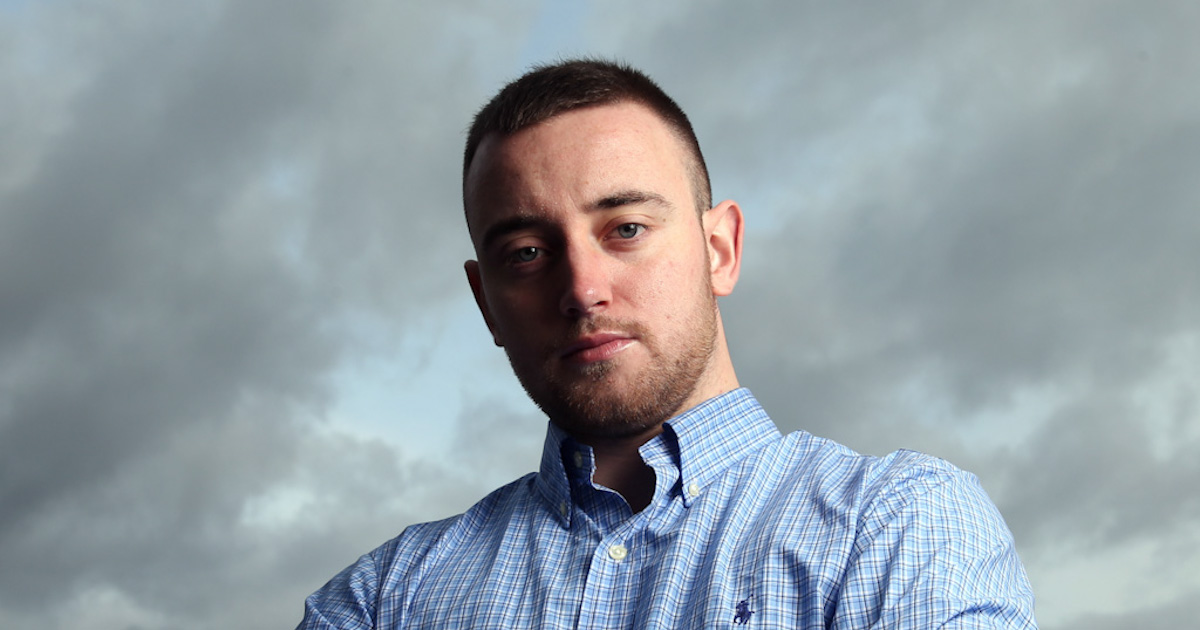
Jacob Dunne is a British author, educator, presenter and restorative justice campaigner whose life changed dramatically after a fatal act of violence in Nottingham in 2011. At 19, he punched James Hodgkinson during a confrontation, and Hodgkinson later died from his injuries. Dunne was convicted of manslaughter and served a prison sentence. In the years that followed, he rebuilt his life with support from others, including the victim’s parents, Joan and David Hodgkinson.
Dunne’s experiences became the basis for his memoir, *Right from Wrong: My Story of Guilt and Redemption*, and the BBC Radio 4 series *The Punch*. His story also inspired *PUNCH*, a stage play written by James Graham that brought questions about violence, accountability, forgiveness and rehabilitation to theatre audiences.
Today, Dunne works to promote restorative justice, improve conversations about crime and conflict, and support efforts to prevent violence. This biography explores his early life, education, criminal conviction, personal transformation, family, book, media career and current advocacy work.
Jacob Dunne Quick Facts
| Full Name | Jacob Dunne |
|---|---|
| Nationality | British |
| Birthplace | Nottingham, England, United Kingdom |
| Date of Birth | Not publicly confirmed in the sources reviewed |
| Age | Exact age not publicly confirmed |
| Profession | Author, educator, presenter and campaigner |
| Known For | Restorative justice advocacy and his life story inspiring PUNCH |
| Education | First-class honours degree in Criminology |
| University | Nottingham Trent University |
| Book | Right from Wrong: My Story of Guilt and Redemption |
| Podcast | The Punch, BBC Radio 4 |
| Marital Status | Married, according to published biographical accounts |
| Children | Two children reported in published biographies |
| Current Work | Restorative justice, education and violence prevention |
Table of Contents
- Who Is Jacob Dunne?
- Early Life and Family Background
- Education and Personal Development
- The 2011 Incident and Manslaughter Conviction
- Prison, Rehabilitation and Life After Release
- How Restorative Justice Changed His Life
- His Book, Right from Wrong
- The BBC Radio 4 Series The Punch
- PUNCH: The Stage Play
- Career and Advocacy Work Today
- Jacob Dunne’s Wife and Children
- Jacob Dunne’s Net Worth
- His Message and Legacy
- Frequently Asked Questions
Who Is Jacob Dunne?
Jacob Dunne is a British campaigner whose work focuses on restorative justice, youth violence prevention, education and the possibility of personal change after offending. His public profile emerged from an experience that had devastating consequences for another family and permanently changed the direction of his own life.
Before becoming an author and advocate, Dunne struggled at school and became involved in drinking, fighting and gang culture in Nottingham. In July 2011, when he was 19, he punched James Hodgkinson during an incident on a night out. Hodgkinson subsequently died, and Dunne was convicted of manslaughter.
After serving his sentence, Dunne faced the challenges of rebuilding his life. He has spoken about experiencing homelessness, unemployment and uncertainty about his future after leaving prison.
A significant turning point came through restorative justice, which created an opportunity for him to meet Hodgkinson’s parents. Their willingness to participate in the process affected his understanding of the consequences of his actions and his responsibilities toward others.
Dunne subsequently pursued higher education, obtained a first-class honours degree in criminology and began using his experiences to help other people understand violence, accountability and rehabilitation.
He has since shared his story through books, broadcasting, public speaking, education and theatre. His work seeks to move discussions about crime beyond punishment alone and toward a deeper examination of harm, responsibility and prevention.
Early Life and Family Background
Jacob Dunne grew up in Nottingham, England, in a working-class environment that he has described when discussing his childhood and teenage years. His early experiences included difficulties at school and problems finding a constructive direction.
In accounts of his life, Dunne has described how he became involved in a culture where fighting, heavy drinking and aggressive behaviour were treated as signs of status among some of his peers. Those influences contributed to a lifestyle that eventually had life-changing consequences.
His story is not presented simply as an account of one violent incident. It also examines the circumstances, decisions and social influences that shaped his behaviour before the incident, while acknowledging the harm caused to another person and their family.
Detailed, independently verified information about his parents and siblings is limited in the public biographies reviewed. For that reason, specific family names and claims about his relatives should not be assumed without reliable confirmation.
Dunne has spoken more extensively about his own experiences and the people who helped him change direction. His later work reflects his belief that young people need opportunities to make better decisions before violence leads to irreversible consequences.
Education and Personal Development
Education became an important part of Dunne’s efforts to rebuild his life. After his conviction and imprisonment, he began to pursue a different future from the one that had previously seemed likely.
He studied criminology at Nottingham Trent University and graduated with a first-class honours degree in 2019. His academic work gave him a formal foundation for examining crime, offending behaviour, rehabilitation and the criminal justice system.
The degree was significant because it represented a major change in direction. Dunne had previously struggled in education, but he later developed the determination to complete university studies at a high level.
His experience also gave him a distinctive perspective when speaking to students, educators, criminal justice professionals and policymakers. He could discuss violence not only as a subject of academic study but also through the consequences of his own actions and the work he undertook afterward.
Dunne has also delivered talks and contributed to educational discussions, including at institutions such as the University of Cambridge. His work encourages audiences to consider how accountability, supportive relationships and access to education can contribute to rehabilitation.
The 2011 Incident and Manslaughter Conviction
In July 2011, Dunne was involved in a violent incident in Nottingham that resulted in the death of James Hodgkinson. Dunne was 19 at the time.
During a confrontation, Dunne punched Hodgkinson. Hodgkinson later died from the injuries associated with the incident. Dunne was prosecuted and convicted of manslaughter, receiving a two-and-a-half-year custodial sentence.
Published accounts state that he served approximately 14 months in custody. His conviction was a defining event in his life and brought serious consequences for both himself and Hodgkinson’s family.
The case illustrates the potentially devastating consequences of a single act of violence. A punch that may have been viewed by the offender as a moment of aggression or a fight became an event that ended a person’s life and left a family grieving.
Dunne has subsequently spoken openly about his responsibility for the harm he caused. His public work does not erase the consequences of the offence or the loss experienced by Hodgkinson’s loved ones. Instead, it explores what accountability can mean after a crime and whether an offender can contribute positively to society following punishment.
The case also became central to wider discussions about violence among young people, the criminal justice system and the possibilities and limitations of rehabilitation.
Prison, Rehabilitation and Life After Release
Dunne’s imprisonment marked a major interruption in his life. After leaving prison, he faced practical difficulties, including homelessness, unemployment and uncertainty about how to move forward.
Rebuilding a life after incarceration can involve more than completing a sentence. Former prisoners may encounter barriers to employment, education, housing and social acceptance. Dunne’s experience of returning to the community brought these challenges into sharp focus.
For him, rehabilitation required a willingness to examine his past behaviour and accept the consequences of his actions. It also involved finding people and opportunities that could help him develop a different future.
His relationship with Hodgkinson’s parents became an important part of that process. Their participation in restorative justice gave him an opportunity to confront the human consequences of the offence in a way that went beyond a courtroom judgment.
Dunne gradually developed a new direction through education, public speaking and work with people affected by crime and the justice system. His experiences eventually became the foundation for his career as an author and advocate.
His story is often discussed in relation to redemption, but it is also a reminder that rehabilitation does not undo the original harm. It describes the work a person undertakes afterward and the responsibility to avoid causing further harm.
How Restorative Justice Changed His Life
Restorative justice is an approach that seeks to address the harm caused by wrongdoing by bringing together affected people when appropriate and safe. Depending on the circumstances, the process can allow victims, offenders and communities to discuss what happened, its consequences and what accountability or repair might involve.
It is not the same as simply forgiving an offender, and it does not require victims or their families to reconcile with the person responsible. Participation must be handled carefully, with appropriate safeguards and respect for the needs of those affected.
For Dunne, restorative justice created an opportunity to meet Joan and David Hodgkinson, the parents of James Hodgkinson. Their willingness to engage with him became one of the most significant experiences in his efforts to understand the consequences of the offence.
The meetings encouraged him to consider the loss from the perspective of the family whose son had died. Rather than focusing only on the punishment he had received, he had to confront the continuing human impact of his actions.
Their involvement also influenced the direction of his later work. Dunne became an advocate for approaches that examine how harm can be acknowledged and how offenders can take meaningful responsibility.
He has used his experiences to speak with young people, educators, criminal justice professionals and other audiences about violence and its consequences.
His advocacy does not suggest that restorative justice is suitable for every case or that it guarantees reconciliation. Instead, his experience demonstrates how a carefully managed process can create opportunities for reflection and accountability for some of the people involved.
His Book, Right from Wrong
Jacob Dunne published his memoir, Right from Wrong: My Story of Guilt and Redemption, in 2022 through HarperCollins.
The book recounts his childhood in Nottingham, his involvement in violence and gang culture, the fatal incident in 2011, his imprisonment and the difficult process of rebuilding his life. It also describes the importance of restorative justice and the relationship that developed with Hodgkinson’s parents.
Rather than presenting the story as a simple tale of personal success, the memoir explores guilt, responsibility and the long-term effects of violence. It considers how Dunne’s decisions affected other people and how his later experiences changed the way he understood those consequences.
The book also examines the social conditions and personal choices that can contribute to offending. Its wider purpose is to encourage reflection on how young people can be prevented from entering cycles of violence and how people who have offended can work toward a more constructive future.
The memoir became an important source for the later theatrical adaptation of his story.
Readers can find publication information through the publisher’s author page.
The BBC Radio 4 Series The Punch
In 2020, Dunne presented The Punch, a BBC Radio 4 series exploring his experience of the fatal incident and the role restorative justice played in his subsequent life.
The series examined the impact of violence, the perspectives of people affected by crime and the possibility of change after serious wrongdoing. It helped bring Dunne’s story to a broader audience and encouraged listeners to consider questions about justice, punishment and rehabilitation.
The programme received the ARIA Award for Best Factual Series in 2021. The recognition marked an important achievement in Dunne’s broadcasting career and helped establish him as a presenter and public speaker beyond his work in justice advocacy.
The series also provided a foundation for wider conversations about the consequences of violence and how communities can respond to harm.
Dunne’s work in broadcasting has generally focused on difficult social questions, using personal experience as a starting point for discussions about accountability and change.
PUNCH: The Stage Play
Dunne’s life story inspired PUNCH, a stage play written by James Graham, the award-winning British playwright known for works exploring politics, public life and contemporary social issues.
The production dramatizes the events surrounding the fatal punch, Dunne’s imprisonment and his later encounter with Hodgkinson’s parents. It examines how one act of violence can affect multiple lives and how people respond to grief, guilt and responsibility.
The play premiered at Nottingham Playhouse before transferring to London’s Young Vic. It subsequently moved to the West End and Broadway in 2025, introducing the story to audiences beyond the places most directly associated with Dunne’s life.
The theatrical adaptation brought difficult questions about violence and rehabilitation into a live performance setting. It encouraged audiences to think about the people behind criminal cases and the long-lasting effects that violence can have on victims, families and offenders.
The production is based on real events, although a stage play necessarily uses dramatic choices to tell the story. It should be understood as an adaptation rather than a substitute for the full historical record.
Further details about the production can be found through the Sounddelivery Media discussion with Jacob Dunne.
Career and Advocacy Work Today
Dunne’s work has developed from sharing his own experiences into broader efforts to improve discussions about criminal justice, violence prevention and rehabilitation.
He works as an author, educator, presenter and campaigner. His activities have included public speaking, educational sessions and conversations with organizations working across justice, health and education.
A major part of his recent work involves the Common Ground Justice Project, which he co-founded in partnership with the Centre for Justice Innovation. The initiative seeks to bring together perspectives from victims, people who have offended, policymakers and communities to explore ways of improving the criminal justice system.
The project reflects an important theme in Dunne’s work: meaningful reform requires listening to people with different experiences rather than relying only on public debate or political disagreement.
He is also associated with Right from Wrong, an educational initiative that develops restorative justice resources, workshops and training for schools, prisons, youth justice teams and other organizations.
These projects extend his work beyond recounting his personal history. They aim to support practical conversations about conflict, responsibility and how institutions can respond more constructively to harm.
For current details about his projects and speaking work, visit Jacob Dunne’s official website.
Jacob Dunne’s Wife and Children
Jacob Dunne is reported to be married and to have two children. Published biographical information about his family is limited, and his wife’s name has not been reliably established in the sources reviewed for this article.
Dunne’s family life is separate from much of his public advocacy. His professional accounts tend to focus on restorative justice, education, violence prevention and his experience of rebuilding his life after prison.
His personal transformation has included establishing a family and developing a career centered on helping other people understand the consequences of violence. However, details about his spouse and children should be treated with care, particularly where information is not confirmed through a reliable source.
Jacob Dunne’s Net Worth
Jacob Dunne’s net worth has not been reliably disclosed, and there is no sufficiently verified public figure that can be presented as his confirmed personal wealth.
His professional activities include writing, broadcasting, public speaking, education and restorative justice advocacy. His memoir has been published commercially, his story has been adapted for theatre, and he has worked with organizations involved in justice and education.
These activities may involve income, fees or other forms of compensation, but the financial details of his publishing arrangements, speaking engagements and projects are not comprehensively public.
It is also important to distinguish a book’s sales, a theatrical production’s box-office revenue and an individual’s personal earnings. They are not interchangeable measures of wealth.
For these reasons, this biography does not assign Dunne a speculative net worth figure. A reliable estimate would require better information about his earnings, assets, liabilities and any relevant business interests.
Jacob Dunne’s Message and Legacy
Jacob Dunne’s public work centers on the consequences of violence and the difficult process of taking responsibility after causing serious harm. His story has reached audiences through a memoir, radio broadcasting, education and theatre.
His experience also highlights the role of people who are willing to engage with the criminal justice system in ways that allow difficult conversations to take place. The decision by Joan and David Hodgkinson to participate in restorative justice was significant to his personal development, although it does not diminish their loss or impose an obligation on other victims’ families to follow the same path.
Dunne’s advocacy encourages schools, communities and justice organizations to consider how violence can be prevented and how accountability can be meaningful. His work also raises questions about what rehabilitation should involve and how people leaving prison can build constructive lives.
His story is not a claim that every offender will change or that every victim should forgive. Rather, it demonstrates how personal responsibility, education and carefully supported restorative processes can influence one person’s path after a serious offence.
Through his continued work in justice education and reform, Dunne has turned his experiences into a platform for discussing how society responds to violence and how future harm might be prevented.
Frequently Asked Questions About Jacob Dunne
Who is Jacob Dunne?
Jacob Dunne is a British author, educator, presenter and restorative justice campaigner. He is known for his memoir Right from Wrong, the BBC Radio 4 series The Punch and the stage play PUNCH, which was inspired by his life.
How old is Jacob Dunne?
His exact date of birth has not been reliably confirmed in the sources reviewed. He was 19 years old at the time of the fatal incident in 2011, but a precise current age should not be stated without a verified birth date.
Why did Jacob Dunne go to prison?
Dunne was convicted of manslaughter after punching James Hodgkinson during an incident in Nottingham in July 2011. Hodgkinson later died from his injuries. Dunne received a two-and-a-half-year custodial sentence and served approximately 14 months.
Who was James Hodgkinson?
James Hodgkinson was the man who died following the 2011 incident involving Dunne. His parents, Joan and David Hodgkinson, later participated in a restorative justice process with Dunne.
Is Jacob Dunne married?
Published biographical accounts report that Dunne is married. The name of his wife has not been reliably established in the sources reviewed for this biography.
Does Jacob Dunne have children?
Yes. Published biographical information reports that he has two children.
What did Jacob Dunne study at university?
Dunne studied criminology at Nottingham Trent University and graduated with a first-class honours degree in 2019.
What is Jacob Dunne’s book called?
His memoir is titled Right from Wrong: My Story of Guilt and Redemption. Published by HarperCollins in 2022, it describes his early life, conviction, imprisonment and subsequent personal transformation.
What is PUNCH about?
PUNCH is a stage play by James Graham inspired by Dunne’s life. It explores the fatal incident, the consequences of violence, Dunne’s imprisonment and his later involvement in restorative justice.
What does Jacob Dunne do now?
He works in restorative justice, education and violence prevention. His activities include public speaking and work connected with the Common Ground Justice Project and Right from Wrong.
What is Jacob Dunne’s net worth?
His net worth has not been reliably disclosed. Without verified financial information, published estimates should not be treated as confirmed figures.
Conclusion
Jacob Dunne’s biography is a story of serious wrongdoing, lasting consequences and the difficult work of personal change. After a fatal act of violence in 2011 and a manslaughter conviction, he faced imprisonment and the challenge of rebuilding his life.
Education, restorative justice and his relationship with James Hodgkinson’s parents helped shape his subsequent direction. Through his memoir, broadcasting and advocacy, Dunne has used his experiences to encourage conversations about accountability, rehabilitation and violence prevention.
His story does not erase the loss suffered by Hodgkinson’s family. Instead, it illustrates how one person’s response to the consequences of an offence can become part of a wider discussion about justice, responsibility and preventing future harm.