
Last updated: October 31, 2026
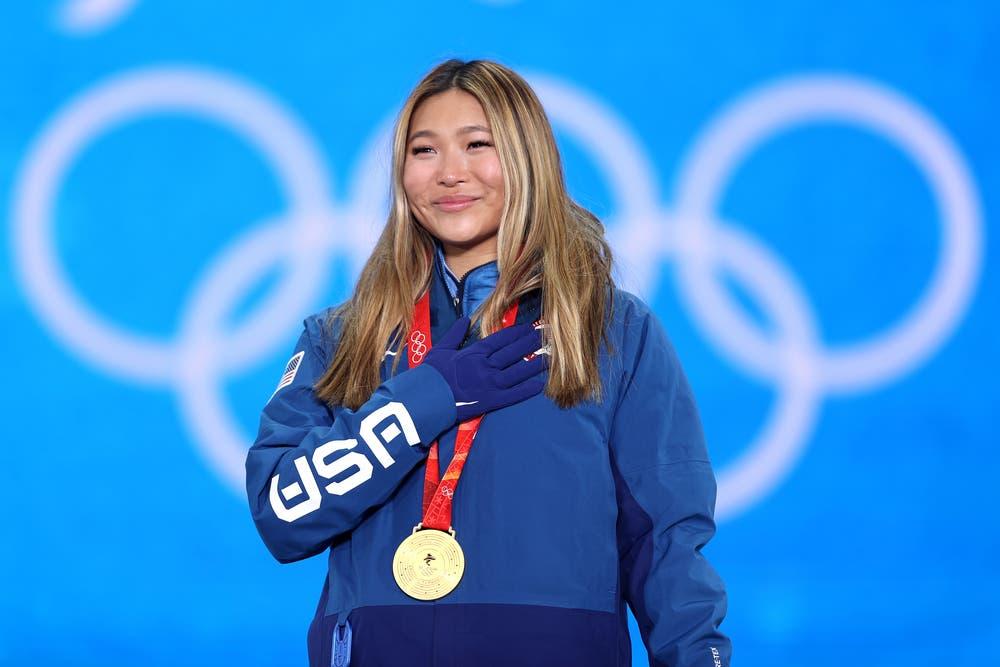
Chloe Kim is an American professional snowboarder widely regarded as one of the greatest athletes in women’s halfpipe snowboarding. Known for her technical precision, powerful aerial tricks and fearless competitive style, she became an international star after winning Olympic gold at the 2018 Winter Olympics in PyeongChang, South Korea. She successfully defended her title at the 2022 Beijing Winter Olympics and added a silver medal at the 2026 Milan-Cortina Winter Games.
Born on April 23, 2000, in Long Beach, California, Kim is a first-generation Korean American whose parents emigrated from South Korea. She began snowboarding at four and quickly demonstrated unusual ability. By her early teenage years, she was already competing against elite athletes, and she won her first major X Games gold medal in 2015.
Kim’s achievements extend beyond the Olympics. She has won multiple X Games titles and three FIS Snowboard World Championship gold medals. She has also become an influential figure in conversations about Asian American representation, athlete mental health and the pressures of competing at the highest level.
Her career has included periods of burnout, time away from competition, a return to elite snowboarding and recovery from injury. These experiences have helped make her story about more than medals: it is also about family support, personal growth and learning to manage the demands of international sport.
Chloe Kim Quick Facts
| Detail | Information |
|---|---|
| Full name | Chloe Kim |
| Date of birth | April 23, 2000 |
| Age | 26 years old as of October 2026 |
| Birthplace | Long Beach, California, United States |
| Nationality | American |
| Ethnic background | Korean American |
| Profession | Professional snowboarder |
| Specialty | Women’s halfpipe |
| Parents | Jong Jin Kim and Boran Kim |
| Education | Princeton University; took time away from studies to focus on snowboarding |
| Olympic medals | Two gold medals and one silver medal |
| World Championship titles | Three women’s halfpipe gold medals |
| 2026 major award | Laureus World Action Sportsperson of the Year |
Table of Contents
- Early Life and Family Background
- Chloe Kim’s Parents and Korean Heritage
- How She Started Snowboarding
- Junior Career and Early Achievements
- 2018 Winter Olympics: Her Breakthrough
- 2022 Winter Olympics and Historic Defense
- 2026 Winter Olympics: Silver Medal
- World Championships and X Games
- Education and Princeton University
- Injuries, Burnout and Mental Health
- Personal Life and Relationships
- Endorsements and Business Ventures
- Chloe Kim’s Net Worth
- Legacy and Influence
- Frequently Asked Questions
Early Life and Family Background
Chloe Kim was born on April 23, 2000, in Long Beach, California. She grew up in Southern California, particularly around Torrance, where her family supported her developing interest in snowboarding. Although snowboarding is associated with mountain resorts and winter conditions, her early life in California did not prevent her from pursuing a sport that would eventually take her around the world.
Kim showed an interest in physical activities and competition from a young age. Her family recognized her potential early, and snowboarding became a major part of her childhood. As she improved, training and travel required increasing amounts of time and effort from both Kim and her parents.
Her rise was not simply a matter of natural talent. Snowboarding at an elite level requires balance, strength, coordination, spatial awareness and the ability to make split-second decisions while airborne. Kim developed these skills through years of practice, coaching and competition.
As her results improved, she began competing against older and more experienced athletes. Her success as a teenager attracted international attention and placed her among the most promising young snowboarders in the world.
Chloe Kim’s Parents and Korean Heritage
Kim is the daughter of Jong Jin Kim and Boran Kim, who emigrated from South Korea to the United States. Her father, Jong Jin, played a particularly important role in supporting her snowboarding ambitions.
According to accounts of her early career, her father helped introduce her to the sport when she was four years old. He invested considerable time in taking her to training sessions and supporting her development. As her talent became clearer, he made significant personal and professional sacrifices to help her pursue competitive snowboarding.
Kim’s family background has become an important part of her public story. As a first-generation Korean American athlete, she has represented the United States at the Olympics while also celebrating her Korean heritage. Her success has resonated with many Asian American fans who have seen her achievements as an important example of representation in elite sport.
She has also spoken about the pressures of being a high-profile athlete and the importance of family support. Her parents’ involvement illustrates how young athletes often depend on a wider network of people to manage travel, training, competition and the emotional challenges of elite performance.
How Chloe Kim Started Snowboarding
Kim began snowboarding at the age of four after her parents introduced her to the sport. Her early ability quickly became apparent, and she progressed from a young recreational snowboarder to a competitor with the potential to challenge elite athletes.
Halfpipe snowboarding involves riding through a large, U-shaped snow structure and performing aerial tricks above its walls. Competitors are judged on factors such as amplitude, execution, difficulty, variety and overall impression. Athletes must combine technical skill with the confidence to perform demanding maneuvers at speed.
Kim developed a reputation for generating impressive height above the pipe and performing difficult combinations of spins and flips. Her technical ability helped her stand out even when she was competing against athletes with considerably more experience.
By the time she was a young teenager, she was already participating in major events. Her results indicated that she could eventually become an Olympic contender, although age restrictions prevented her from competing at the 2014 Winter Olympics in Sochi.
Junior Career and Early Achievements
Kim made her X Games debut in 2013, finishing second in the women’s superpipe competition. The result immediately drew attention because she was competing against experienced athletes despite being only 13 years old.
In 2015, she won gold in the women’s superpipe at the Winter X Games at age 14, becoming the youngest gold medalist in the event’s history at that time. The victory established her as one of the sport’s most exciting young competitors.
She continued to excel in junior and international competitions. At the 2016 Winter Youth Olympic Games in Lillehammer, Norway, she won gold medals in both halfpipe and slopestyle. Those results showed that her abilities extended beyond one event and established her as a leading young snowboarder.
Despite having the ability to qualify for the 2014 Olympics, Kim was too young under the competition’s age requirements. The delay meant she had to wait until the 2018 Games for her Olympic debut, but the intervening years allowed her to gain experience and strengthen her competitive record.
2018 Winter Olympics: Her Breakthrough
Kim’s international breakthrough came at the 2018 Winter Olympics in PyeongChang, South Korea. Competing in the women’s halfpipe at just 17 years old, she won the gold medal with a performance that demonstrated both technical difficulty and composure under pressure.
The victory was especially meaningful because the Games took place in her parents’ country of origin. Kim represented the United States while competing in a nation closely connected to her family’s heritage.
Her winning run included back-to-back 1080-degree spins, a demanding combination that demonstrated her ability to execute high-level tricks with consistency. She scored 98.25 points in the final, giving her a decisive victory.
Kim became the youngest woman to win an Olympic snowboarding gold medal. Her performance also helped raise the profile of women’s halfpipe snowboarding among viewers who might not otherwise have followed the sport.
After the victory, she became one of the most recognizable young athletes in the United States. She received widespread media coverage, commercial opportunities and invitations to participate in campaigns that extended her visibility beyond snowboarding.
2022 Winter Olympics and Historic Defense
Four years after her Olympic debut, Kim returned to the Winter Games in Beijing in 2022. Expectations were high because she had become one of the most dominant athletes in women’s halfpipe and was attempting to defend her title.
Kim won gold again, becoming the first woman to win consecutive Olympic gold medals in snowboarding’s halfpipe event. Her victory confirmed that her 2018 performance had not been an isolated achievement. She had maintained her technical level and competitive focus despite the pressure that comes with defending an Olympic title.
Her Beijing performance included a strong opening run that gave her a significant advantage. Although the competition remained demanding, she demonstrated the ability to manage pressure and deliver a winning result on the biggest stage in her sport.
Between the 2018 and 2022 Games, Kim had experienced the demands of celebrity, sponsorships and life as a young public figure. Her return to competition showed that she could step away when necessary, reassess her priorities and return to elite performance.
2026 Winter Olympics: Silver Medal
Kim entered the 2026 Winter Olympics in Milan and Cortina d’Ampezzo, Italy, with the possibility of becoming the first snowboarder to win three consecutive Olympic gold medals in women’s halfpipe. She had already established herself as a two-time Olympic champion and one of the leading athletes in the event.
Her preparation was disrupted by a shoulder injury sustained during training in Switzerland shortly before the Games. The injury limited her opportunity to snowboard in the final stages of preparation, creating uncertainty about how well she could perform under Olympic pressure.
Despite the setback, Kim competed in the women’s halfpipe final at Livigno on February 12, 2026, and won the silver medal. The result gave her a third consecutive Olympic medal and brought her overall Olympic total to two gold medals and one silver.
Although she did not achieve the historic third consecutive gold, the silver medal demonstrated her ability to compete at the highest level while recovering from a serious disruption to her preparation. Her performance also reinforced the difficulty of maintaining dominance in a sport where a single mistake or a rival’s exceptional run can change the final standings.
Kim’s 2026 Olympic result added another important chapter to her career. Rather than defining her success only by whether she won gold, the performance highlighted her resilience, technical ability and consistency across three Olympic Games.
World Championships and X Games
Kim’s success extends well beyond the Olympic Games. She has earned multiple X Games gold medals and won three FIS Snowboard World Championship titles in women’s halfpipe, in 2019, 2021 and 2025.
Her third world title came at the 2025 FIS Snowboard World Championships in Switzerland. During the competition, she landed a switch double cork 1080, a highly difficult trick involving two off-axis flips and three full rotations. The achievement was widely reported as a milestone for women’s snowboarding.
Kim also won gold in the superpipe at the 2025 Winter X Games in Aspen, earning her eighth X Games gold medal. That result tied Shaun White’s record for the most X Games halfpipe victories and made her one of the most decorated women in X Games history.
Her performances at these events demonstrate why she is regarded as one of the sport’s leading athletes. She combines height, rotation, technical difficulty and the ability to execute complex tricks under competition conditions.
In 2026, Kim received the Laureus World Action Sportsperson of the Year award. The honor recognized her achievements and continued influence in action sports, adding to the recognition she has earned throughout her career.
Education and Princeton University
Despite her demanding athletic schedule, Kim has also pursued higher education. She enrolled at Princeton University in 2019, a major step for an athlete whose training and competition calendar requires extensive travel.
Kim later took a leave of absence to focus on snowboarding. Elite athletes often face difficult choices when balancing university study with international competition, particularly during Olympic cycles when preparation can require nearly year-round commitment.
Her decision to pause her studies reflected the demands of her sport rather than a lack of interest in education. Kim has discussed the importance of personal growth and having interests beyond snowboarding, and university life offered an opportunity to explore experiences outside the competitive environment.
Her education remains one part of a broader life that includes athletic ambition, personal development and interests in fashion and popular culture. Public biographies do not establish that she has completed a degree at Princeton, so it is more accurate to say she attended the university and took time away from her studies.
Injuries, Burnout and Mental Health
Kim’s career has included periods when she needed to step back from competition. After becoming an Olympic champion at 17, she faced the demands of constant public attention, commercial commitments and the pressure to remain at the top of her sport.
In 2019, she took a break from competitive snowboarding. She has spoken about burnout and the need to reconnect with her reasons for participating in the sport. The decision to step away was significant because it showed that even a highly successful athlete can need time to recover mentally and emotionally.
Her return to competition and subsequent Olympic victory in 2022 demonstrated that a break can form part of a long-term strategy for sustaining performance. Elite sport requires not only physical preparation but also motivation, emotional resilience and the ability to manage expectations.
Kim has also spoken publicly about the importance of mental health and self-care. Her willingness to discuss these subjects has helped broaden the conversation about what athletes experience outside the moments viewers see on television.
The shoulder injury she sustained before the 2026 Winter Olympics added another challenge to her career. Her silver medal after limited final preparation showed her ability to adapt, although injuries can have different effects on each athlete and recovery should never be taken for granted.
Chloe Kim’s Personal Life and Relationships
Kim generally keeps her private life separate from her competitive career, although she has shared aspects of her experiences through interviews and social media. Her public identity is closely associated with snowboarding, family support, Korean American representation and her interests outside sport.
She has previously been publicly linked to fellow snowboarder Toby Miller. However, relationship details can change, and older reports should not automatically be treated as confirmation of her current relationship status. As of this article’s publication, a current marriage or partner status should be verified through a reliable recent statement before being presented as fact.
Kim has no publicly confirmed children in the athlete biographies consulted for this article. Her public appearances and interviews tend to focus on her sport, family, mental health, education and other interests.
Her experiences also reflect the challenges of growing up in the public eye. Beginning her international career as a teenager meant that ordinary milestones took place alongside Olympic competition, sponsorship commitments and intense media attention.
Endorsements and Business Ventures
Kim’s Olympic success has created opportunities to work with brands in sportswear, fashion and lifestyle products. Her endorsement portfolio has included Roxy, the action-sports apparel company that has supported her snowboarding career.
She has also participated in fashion projects and campaigns beyond traditional snowboarding equipment. Her work with eBay and Vogue on the “Eternal Eras of Fashion” campaign, for example, connected her interest in style with vintage and pre-loved luxury clothing.
These partnerships demonstrate how elite athletes can build a professional identity beyond competition. Sponsorships may provide financial support and access to resources, while brands benefit from an athlete’s achievements, visibility and connection with fans.
However, endorsement arrangements vary considerably. Some include cash payments, others involve products or campaign fees, and contract details are often confidential. The existence of a partnership does not establish the exact amount an athlete earns.
Chloe Kim’s Net Worth
Chloe Kim’s exact net worth has not been publicly verified through audited personal financial statements. Estimates published online can vary substantially and may not explain how they calculate an athlete’s wealth.
Her potential income sources include sponsorships, endorsement contracts, competition prize money, appearance fees and commercial collaborations. Olympic success can increase an athlete’s marketability, particularly when a strong competitive record is combined with public recognition and a distinctive personal brand.
However, sponsorship revenue is not the same as personal wealth. Training, coaching, travel, equipment, management, taxes and other expenses can reduce the amount an athlete ultimately retains. Some contracts may also include performance conditions or non-cash benefits.
For those reasons, a precise dollar amount should not be treated as fact without reliable financial reporting. Kim’s achievements make her a commercially valuable athlete, but her exact net worth remains private.
Chloe Kim’s Legacy and Influence
Kim’s legacy is built on a combination of athletic achievement and cultural influence. Her two consecutive Olympic gold medals in women’s halfpipe established her as a historic figure in snowboarding, while her 2026 silver medal added to her record of three consecutive Olympic podium finishes.
Her technical accomplishments have also helped push the boundaries of women’s snowboarding. By landing difficult combinations of spins and flips, she has shown how the sport continues to evolve and how women athletes are raising the standard of competition.
Kim’s Korean American background has made her an important figure for representation in American sport. Her success has inspired young athletes who may not have previously seen themselves reflected in winter sports or elite action-sports competition.
She has also used her public platform to discuss mental health, burnout and the pressures associated with early fame. These conversations help show that success is not simply a matter of winning medals; it also involves learning how to manage challenges and maintain a sustainable relationship with one’s work.
Her recognition at the 2026 Laureus World Sports Awards further confirmed her standing within international action sports. Taken together, her Olympic results, world titles and influence make her one of the defining snowboarders of her generation.
Frequently Asked Questions About Chloe Kim
How old is Chloe Kim?
Chloe Kim was born on April 23, 2000. She is 26 years old as of October 2026.
Where was Chloe Kim born?
She was born in Long Beach, California, and grew up in Southern California, including the Torrance area.
Who are Chloe Kim’s parents?
Her parents are Jong Jin Kim and Boran Kim, who emigrated from South Korea to the United States. Her father played a major role in supporting her early snowboarding development.
How many Olympic medals has Chloe Kim won?
She has won three Olympic medals: gold in women’s halfpipe in 2018 and 2022, followed by silver in 2026.
Did Chloe Kim win the 2026 Winter Olympics?
She won silver in the women’s halfpipe at the 2026 Winter Olympics in Italy. She had been seeking a third consecutive Olympic gold medal after her victories in 2018 and 2022.
What sport does Chloe Kim compete in?
She is a professional snowboarder who specializes in women’s halfpipe, an event in which athletes perform aerial tricks while moving through a U-shaped snow structure.
What is Chloe Kim’s ethnicity?
Kim is Korean American. Her parents emigrated from South Korea, and she has spoken about the importance of her heritage.
Did Chloe Kim attend Princeton University?
Yes. She enrolled at Princeton University in 2019 but later took a leave of absence to focus on competitive snowboarding. Public sources do not establish that she has completed a degree.
What is Chloe Kim’s net worth?
Her exact net worth has not been publicly verified. Sponsorships, endorsements, prize money and commercial partnerships are potential sources of income, but online wealth estimates should be treated cautiously.
What awards has Chloe Kim won?
Her major achievements include Olympic gold medals in 2018 and 2022, an Olympic silver medal in 2026, three FIS Snowboard World Championship gold medals, multiple X Games titles and the 2026 Laureus World Action Sportsperson of the Year award.
Conclusion
Chloe Kim’s biography is a story of extraordinary athletic talent, family support and resilience. From learning to snowboard at four years old to becoming a two-time Olympic champion, she has repeatedly demonstrated the skill and determination required to compete at the highest level.
Her silver medal at the 2026 Winter Olympics added another achievement to an already remarkable career, particularly after an injury disrupted her preparation. With world titles, X Games victories and international recognition, she has established a legacy that extends well beyond a single Olympic performance.
Kim’s influence also reaches into conversations about representation, mental health and the challenges of growing up in the public eye. Through her achievements and willingness to discuss the pressures of elite competition, she has become both a leading athlete and an influential figure for the next generation of snowboarders.